
Keynote Address
Every year we present a well-known personality from science, society, economy, politics or sports as speaker at the SEPAWA CONGRESS. Be it current topics or perennial favorites, it will certainly spark your interest.
New Future: The Big Changes of our Time
Thursday, 15 October 2026 from 13:15 – 14:30 hrs in the Auditorium
On the Great Transformation of Our Time
Are we in a crisis—or a transition? It’s important to distinguish between the two: In crises, the “old normal” soon returns. Transitions, on the other hand, involve a transformation that demands a different understanding of the world, a different kind of “change engagement”.
– The Waves of Change: How do we recognize that an old era is ending and a new one is beginning?
The New World (Dis)orders: Speculations about the geopolitical future.
Next Society: How would a society, a democracy, have to function in the future?
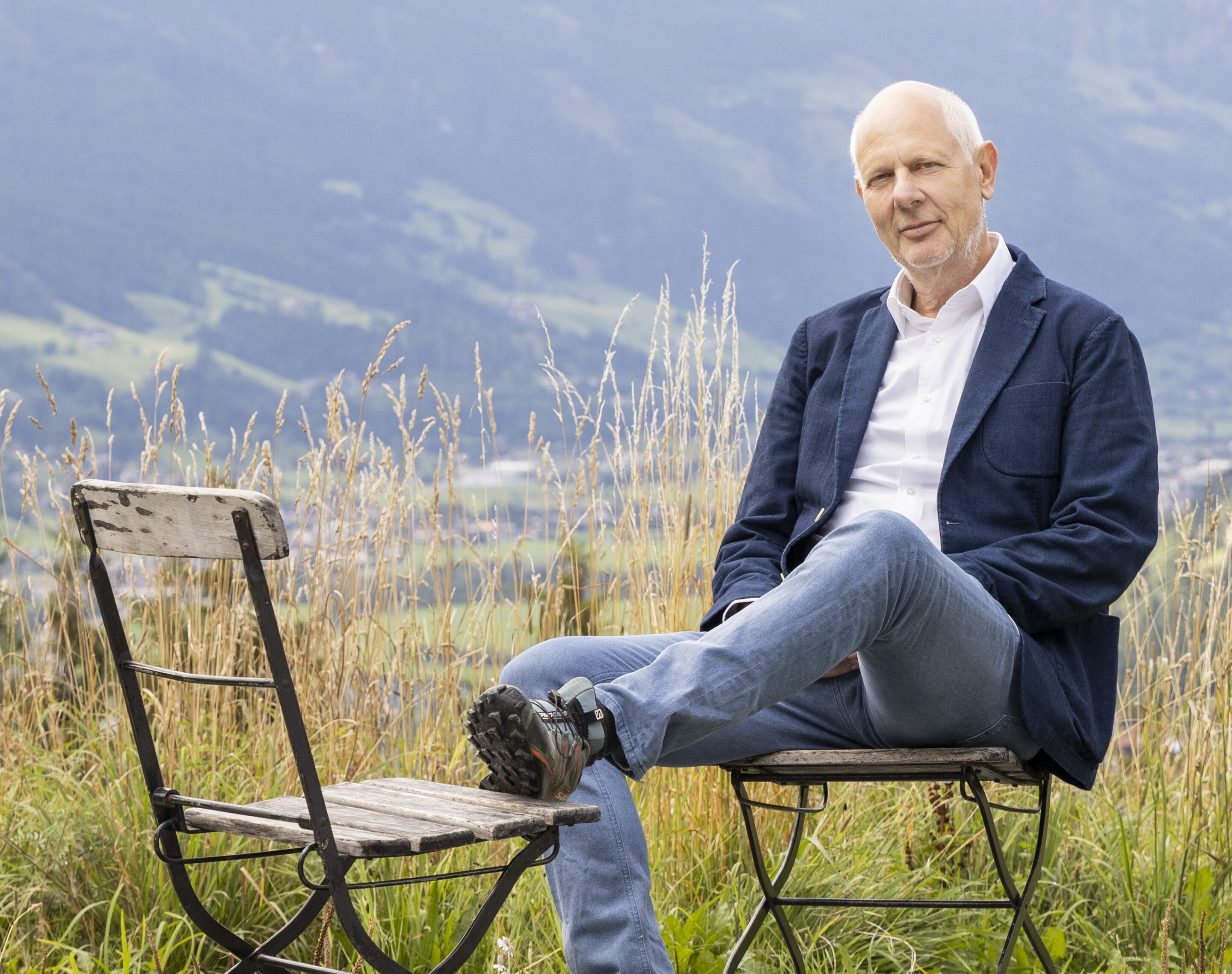
Matthias Horx
Welcome to the future!
Short biography of Matthias Horx
Already as a young technophile in the 60s, he was interested in the mysteries of the future. After a career as a journalist and publicist, he became the most influential futurist in the German-speaking world. He has published some 20 books, many of which have become bestsellers.
He stands for a futurology that does not chase after every fear or technology hype, but looks instead at the change of consciousness. He says, ”The future arises when we look at the world from the perspective of tomorrow — and our mind feels the connections between the present and the future!”
A passionate European, he commutes between London, Frankfurt and Vienna, where he has lived with his family since 2010, in the “Future Evolution House”.
Mission and goals
Matthias Horx’s life project is the further development of the “futurology” of the 60s and 70s towards a holistic prognostic methodology — an interdisciplinary combination of system, social, cognitive and evolutionary sciences.
Topics & personalities
Every year, SEPAWA invites a renowned personality from the fields of science, society, business, politics or sports are invited to give a keynote lecture. In recent years, these were:
- In 2025, Prof. Dr. Anabel Ternès von Hattburg spoke on “The Green Revolution: Industry Transformation for a Sustainable Future,” showing how leadership and self-leadership enable organizations and individuals to drive sustainable change.
- 2024 Prof. Dr. Dr. h.c. Clemens Fuest from the IFO Institute e.V. used the topic “Europe 2024/2025: Between Energy Crisis and Geopolitical Challenges” as an opportunity to show politicians, scientists and each of us how these challenges can be met.
- Dr. Theo Waigel spoke in 2023 on the topic “Politics and Economy in Unsteady Times”. Although he referred to the problems in the world, he had a lot of material that gives courage if everyone sees and uses their opportunities.
- At the first post-COVID live congress in 2022, Jens Bode, as Innologe, inspired the audience with the topic: “The I-Point. With Your Own Talent, (Trend)Inspiration & Desire to Innovate.”
- 2021, Prof. Dr. Dr. Manfred Spitzer, neuroscientist and psychiatrist, inspired us with a lecture about the brain, the computer and mental capacity and what we have learned in the last 20 years.
- 2020, Prof. Dr. Dirk Notz, climate researcher, held a lecture titled “The Big Melt.” In his presentation, he shed light on global climate change. He linked his own experiences from his numerous expeditions with the scientific background of global climate change.
- In 2019 Dr. Richard David Precht, author and publicist, talked about the topic “digital revolution and the future of how we work.”
- 2018, Antonia Rados, foreign correspondent and journalist, held a lecture with the title: “Turmoil in the Middle East – Consequences for Europe.”
- In 2017, Dr. Ulf Merbold took the delegates on a space flight with a critical view onto our blue planet Earth. Anyone who has ever had the privilege to see its beauty from space should make it their mission to preserve it.
- 2016 Dr. Gregor Gysi gave an inspiring lecture on global consumption, its development and reduction and changes.
Impressions


